Interesting
-
The Discovery of DNA: A Milestone in Science
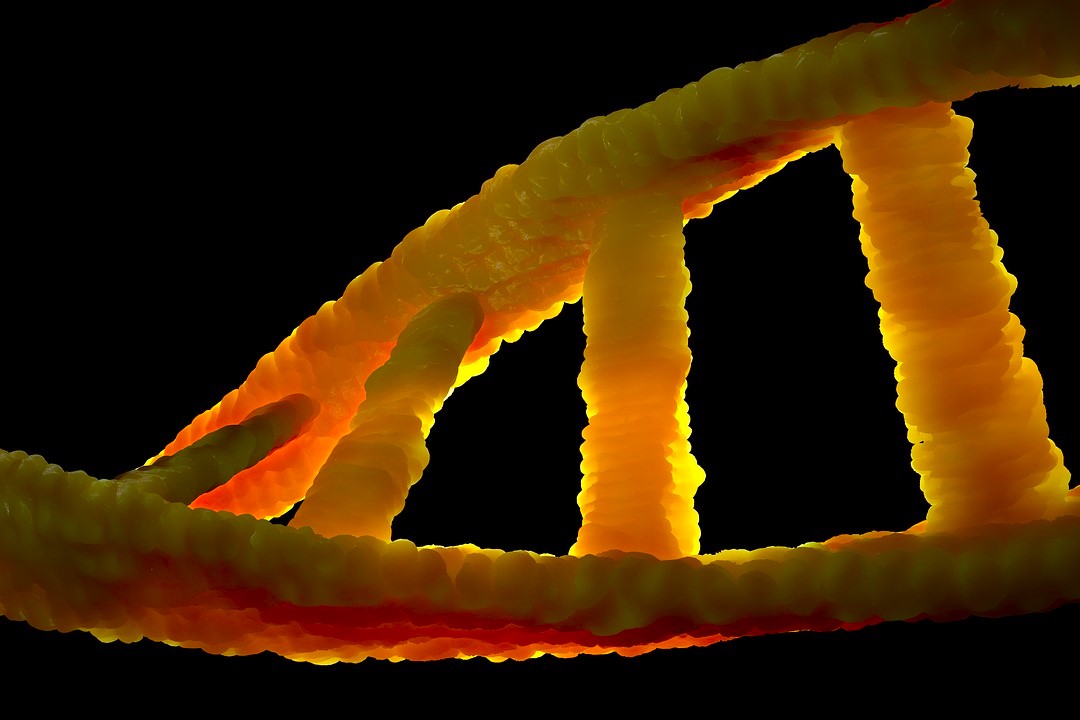
Science days: February 28th On February 28, 1953, James Watson and Francis Crick made a groundbreaking announcement. This would forever change the course of biology and medicine. They discovered the double helix structure of DNA. This moment marked a milestone in human understanding of genetics and how life operates at its most fundamental level. Behind…
-
Celebrating Darwin Day: The Legacy of Evolution

Science days: February 12th Every year on February 12, the world celebrates Darwin Day. This global event commemorates the life and work of Charles Darwin, a renowned naturalist. He revolutionized our understanding of life on Earth. This day honors Darwin’s contributions to science, particularly his groundbreaking theory of evolution by natural selection. Who Was Charles…
-
International Day of Women and Girls in Science

Science days: February 11th Every year, February 11 marks the International Day of Women and Girls in Science. This day is dedicated to recognizing the critical role women and girls play in advancing science and technology. The United Nations established this day in 2015. It promotes gender equality and encourages greater participation of women in…
-
Mathematical symbols – Factorial

Factorial, denoted by “!”, is a mathematical operation where a number is multiplied by all positive whole numbers less than it down to 1. It emerged from practical observations in mathematical calculations. Factorials are crucial in permutations, combinations, probability, and series expansions. Interestingly, factorials grow rapidly, and their notation “n!” makes complex calculations more manageable.
-
Mathematical symbols – Infinity (and beyond?)

The symbol for infinity, “∞,” signifies boundlessness, originating from the Latin “infinitas” for “without end.” It denotes endlessness in mathematics, featured in calculus and set theory to represent concepts like infinite series and limits. Ancient Greeks and Indians also conceptualized infinity, inspiring its formal symbol during the Renaissance. Interestingly, mathematicians discovered different sizes of infinity.
-
Mathematical symbols – Pi – what is it?

The mathematical sign of pi expressed by the symbol “π” (Greek letter) represents the ratio of the circumference of a circle to its diameter. The origin Originating from ancient civilizations like the Babylonians and Egyptians, pi was a fundamental concept in their understanding of geometry and measurement. These ancient civilizations, particularly the Egyptians, demonstrated a…
-
Mathematical symbols – Sum of

The mathematical sign for sum of is represented by the symbol “∑“. It is known as Sigma, Greek letter. It is used in mathematics to indicate the summation of a series of numbers or terms. The origin Originating from the Greek alphabet, Sigma finds its roots in the letter “∑” (uppercase) or “σ” (lowercase). It…
-
Mathematical symbols – absolute value

The mathematical sign of absolute value, represented by the symbol “IxI” is used in mathematics to indicate the distance of a number x from zero on the number line. Interesting property of the absolute value is its symmetry. |x| is equal to |-x| for any real number x. This symmetry reflects the idea that the…
-
Mathematical symbols – brackets

The mathematical sign of brackets, denoted by the symbol “[],” is used in mathematics to enclose, group, clarify, and organize expressions. Technically brackets are punctuation marks in the shape of paired square symbols. The origin Brackets have a fascinating origin deeply rooted in the history of mathematics. The first recorded use of brackets can be…
-
Mathematical symbols – braces

The mathematical sign of braces, denoted by the iconic symbol “{ },” represents a cornerstone in mathematical notation. Its origins can be traced back all the way to medieval manuscripts. Evolving over centuries, this symbol have become indispensable in expressing various mathematical concepts. Function and Use Fundamentally, braces serve the crucial role of indicating a…