Lingabites
-
Delexical verbs

Delexical verbs, also known as “light verbs” or “empty verbs,” are verbs that carry relatively little meaning on their own and are often used in conjunction with nouns or noun phrases to create specific verb-noun combinations. These combinations convey a more precise or nuanced meaning than the verb or noun would convey individually. In essence,…
-
Branches – Mathematics

Mathematics is a broad and diverse field that can be categorized into various branches based on the types of problems and concepts they study. So let’s take step back and list some major branches of mathematics: These are just a few examples, and there are many more specialized branches and interdisciplinary areas within mathematics. Many…
-
Elementary algebra – polynomials
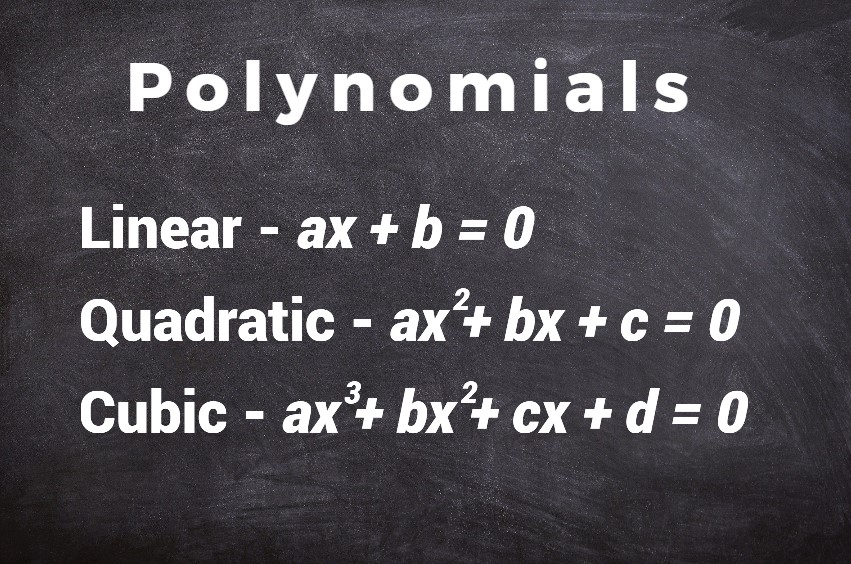
Polynomials are mathematical expressions made up of variables, coefficients, and exponentiation. They can have one or more terms, where each term consists of a coefficient multiplied by one or more variables raised to non-negative integer exponents. Here’s a general form of a polynomial: In this expression: Here are some basic operations and concepts related to…
-
Long division

Long division is a method of dividing two numbers, usually one larger number (the dividend) by another smaller number (the divisor), to find the quotient and remainder. This method breaks down the division process into smaller, more manageable steps. I will show here long division the way I was thought and this method makes more…
-
Elementary algebra -equations

In mathematics, an equation is a statement that shows the equality of two mathematical expressions. It contains variables, constants, and mathematical operations such as addition, subtraction, multiplication, division, exponentiation, and more. The goal of solving an equation is to find the values of the variables that make the equation true. Equations are used to model…
-
Coefficients
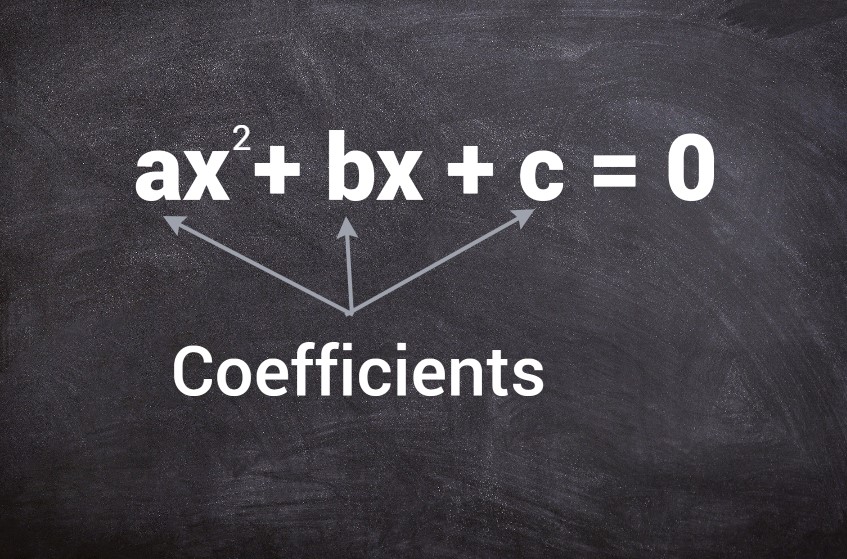
In mathematics, coefficients play a crucial role in various contexts, including algebra, calculus, and linear algebra. A coefficient is a numerical or algebraic factor that is multiplied to a variable or a term in a mathematical expression. Here are some common areas where coefficients are used: Coefficients are crucial in understanding and manipulating mathematical expressions…
-
Elementary algebra -inequalities
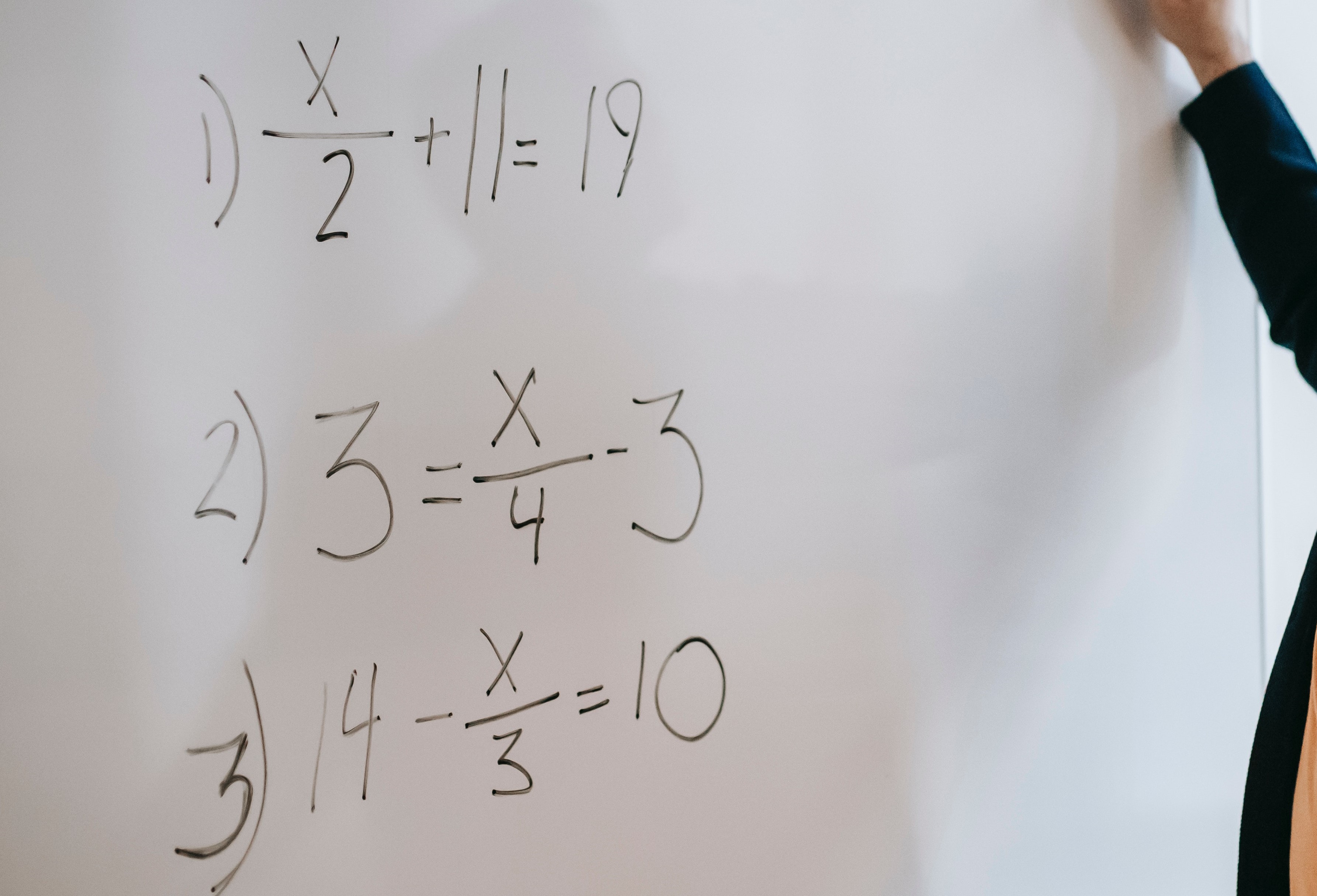
In mathematics, inequalities are statements that describe the relationship between two expressions, indicating that one expression is greater than, less than, greater than or equal to, less than or equal to, or not equal to the other expression. Inequalities are used to compare quantities and establish constraints or bounds on variables. The symbols commonly used…
-
Elementary algebra -exponents
In elementary algebra, exponents are a fundamental concept used to represent repeated multiplication of a number by itself. An exponent is a small number written above and to the right of a base number, indicating how many times the base is multiplied by itself. The exponent tells us the power to which the base is…
-
Elementary algebra -variables
In mathematics, variables are symbols or letters used to represent unknown or changing quantities in mathematical expressions, equations, and formulas. They allow us to generalize mathematical relationships and describe patterns and rules without specifying specific numerical values. Variables serve as placeholders for numbers or other mathematical entities, and their values can vary depending on the…
-
Questions and negatives in the English language
In the English language, questions are sentences that seek information, clarification, or confirmation. They typically begin with question words (interrogative pronouns) such as “who,” “what,” “where,” “when,” “why,” and “how,” or they may use auxiliary verbs to invert the subject and the main verb. Questions often end with a question mark (?). Here are some…