Lingabites
-
Verb tenses – future – perfect

The future perfect tense is used to express an action that will be completed or finished at a specific point in the future before another action or time reference occurs. It describes an event that will have happened by a certain time in the future. The future perfect tense is formed by using the auxiliary…
-
Verb tenses – future- continuous
The future continuous tense is used to describe an ongoing action or event that will happen in the future. It emphasizes that the action will be in progress at a specific time or during a specific period in the future. The future continuous tense is formed by using the auxiliary verb “will” followed by “be”…
-
Verb tenses – future – simple
-
Mathematical symbols – plus sign

The historical evolution of the “+” sign is an interesting journey that spans several centuries: Throughout history, the “+” sign has evolved from ancient hieroglyphs and Latin abbreviations to its recognizable form today. Its development and widespread acceptance demonstrate the evolution and standardization of mathematical notation, allowing for clearer communication and efficient representation of mathematical…
-
Verb tenses – past – perfect – continuous
The past perfect continuous tense, also known as the past perfect progressive tense, is a verb tense used to describe an ongoing action that started in the past and continued up until another point in the past. It emphasizes the duration or continuity of an action in the past. The past perfect continuous is formed…
-
Verb tenses – past – perfect
The past perfect, also known as the pluperfect, is a verb tense used to describe an action that occurred before another past action or point in time. It is formed by using the auxiliary verb “had” followed by the past participle of the main verb. The structure of the past perfect tense is as follows:…
-
Verb tenses – past – continuous
The past continuous is all about capturing the ongoing action in the past. It’s like a snapshot of a moment that’s still in progress. Imagine you’re at a party, and you spot your friend, let’s call them Sammy, doing something absolutely outrageous. As you approach Sammy, you exclaim, “Sammy, what on Earth were you doing?”…
-
Verb tenses – past – simple
-
2D shapes – Decagon
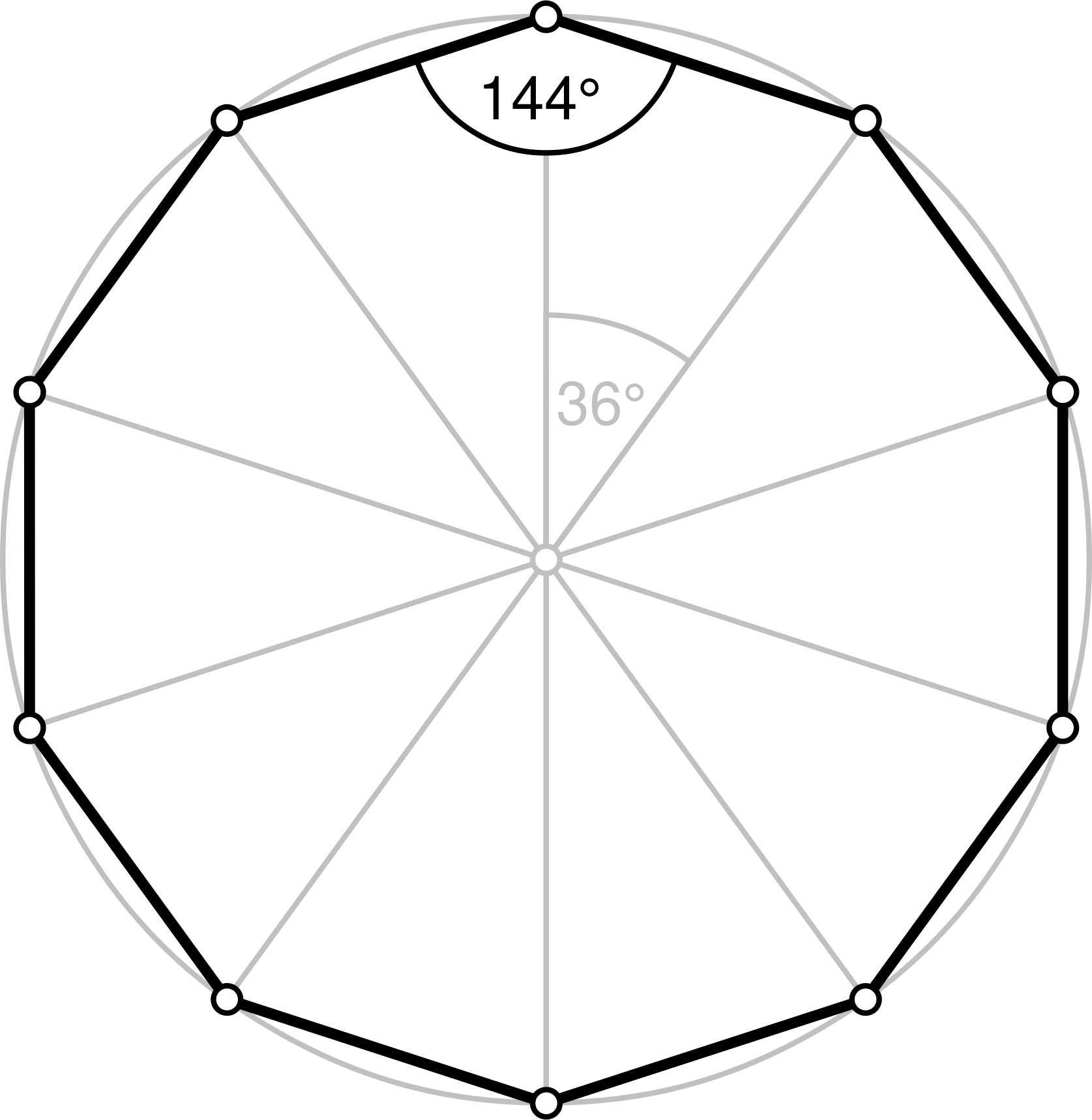
A decagon is a polygon that consists of ten sides and ten angles. The word “decagon” is derived from the Latin words “deca,” meaning ten, and “gonia,” meaning angle. It is classified as a regular polygon because all of its sides have equal lengths and all of its angles have equal measures. Properties of a…
-
2D shapes – Nonagon
