Lingabites
-
Discovery of the Higgs boson

Science Days: 4th of July On July 4, 2012, physicists at CERN (the European Organisation for Nuclear Research) made an announcement. This electrified the scientific community. They discovered a new particle consistent with the Higgs boson. This breakthrough marked the culmination of decades of research. It confirmed a key component of the Standard Model of…
-
One more time: What is Linear Algebra

-
Learn English with Idioms

-
Expanding the vocabulary: Susurrus

-
Avoiding Redundancy: Linear Independence

(or: Why packing two hairdryers is a terrible idea) Picture this: you’re packing for a short trip. You double-check your bag, and, just to be safe, you toss in two identical hairdryers. Same size, same model, same everything. Unless you’re secretly a stylist on tour, that second hairdryer? Pointless. It adds weight without adding value.…
-
Learn English with Idioms
-
Expanding the vocabulary: Muster
-
June solstice: celebrating the longest day

Science Days: 21st of June The June Solstice occurs on the 21st of June (or occasionally June 20). It marks a pivotal moment in Earth’s annual journey around the Sun. For the Northern Hemisphere, it is the longest day of the year, signalling the start of summer. In the Southern Hemisphere, it is the shortest…
-
Vectors: The Building Blocks of Linear Algebra
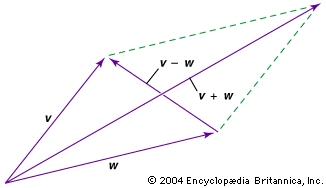
Picture giving directions: “Take 3 steps forward, then 4 to the right.” That’s a vector, a quantity with both direction and magnitude. In math, it’s written like this:v = [3, 4] This notation shows how far to move in each dimension. It’s concise, practical, and powerful. Vectors appear in physics (forces), video games (movement), data…
-
Learn English with Idioms