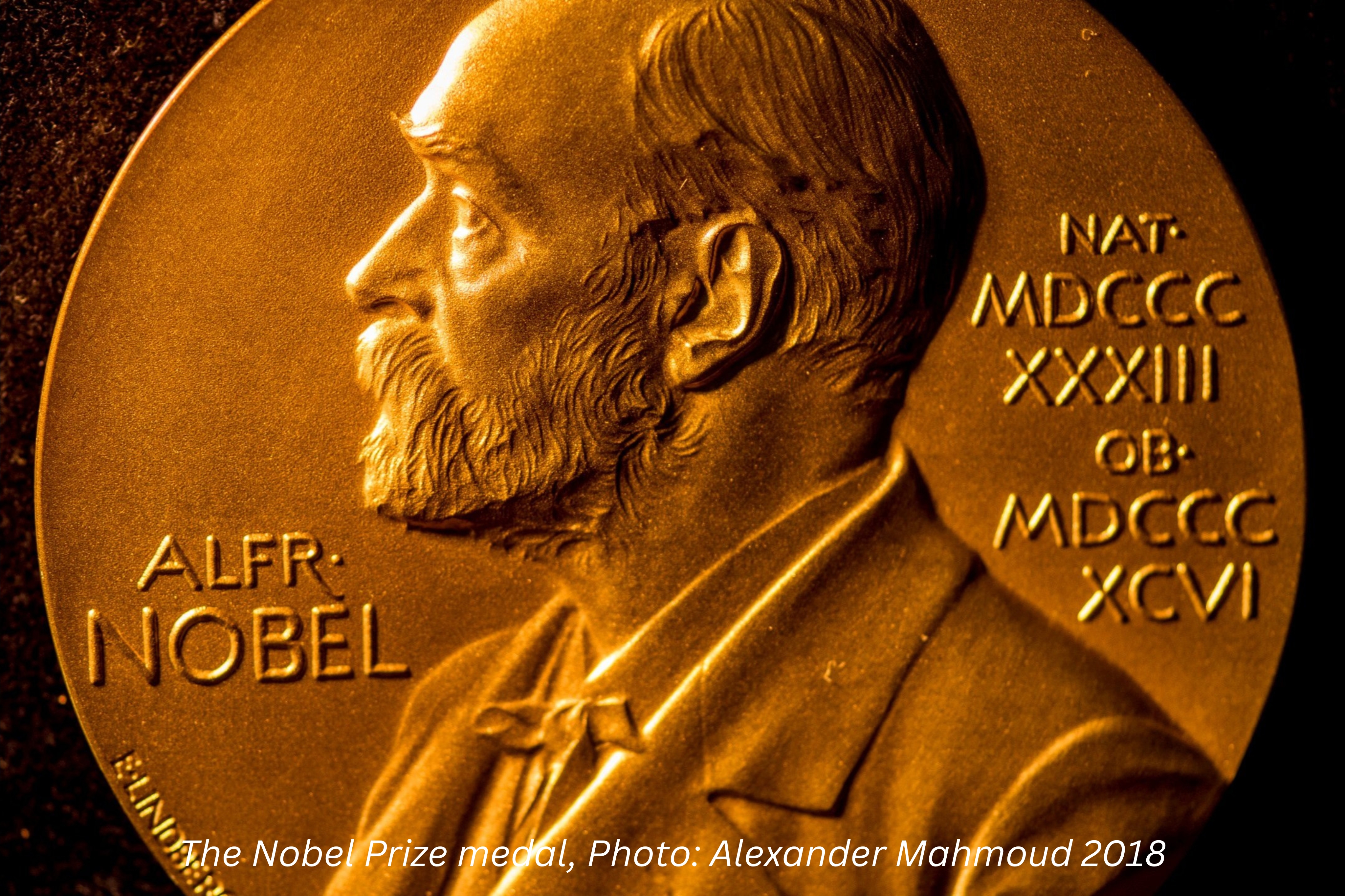
Alfred Nobel died on 10th of December 1896, leaving behind a fortune built on explosives and a will that surprised everyone. The Swedish chemist who held over 350 patents, including dynamite, had grown increasingly troubled by what his inventions enabled. He’d watched his creation transform construction and mining, but also warfare. A French newspaper mistakenly published his obituary early. It called him the “merchant of death.” Nobel confronted his own legacy while still alive.
His response was extraordinary. He allocated the bulk of his fortune, which is equivalent to hundreds of millions in today’s currency. He used this wealth to establish prizes. These awards recognize those whose work “conferred the greatest benefit to humankind.” On 10th of December 1901, exactly five years after his death, the first Nobel Prizes were awarded in Stockholm and Oslo. A man haunted by destruction created the world’s most prestigious tradition of celebrating human achievement.
The question is whether that tradition still serves its original purpose, or whether it’s become something else entirely.
What Counted in 1901
The inaugural Nobel Prizes in 1901 were awarded to Wilhelm Röntgen for discovering X-rays. Jacobus Henricus van ‘t Hoff received it for work on chemical dynamics. Emil von Behring was honored for developing serum therapy for diphtheria. The prize also went to poet Sully Prudhomme. It was awarded jointly to Red Cross founder Henry Dunant and pacifist Frédéric Passy.
Look closely at that list. You see Nobel’s vision in action. Physics is revolutionizing medicine. Chemistry establishes new fields. Medical breakthroughs save lives. Literature is elevated to equal importance with science. Peace work is recognized alongside technical achievement. The prizes balanced discovery with application, knowledge with human welfare.
Doctors can see inside the human body without cutting it open, thanks to Röntgen’s X-rays. This development was so transformative that surgeons could suddenly diagnose internal injuries. They could also identify diseases that had been invisible. Von Behring’s diphtheria serum turned a death sentence into a treatable condition, saving thousands of children annually. These weren’t abstract achievements. They were interventions that immediately improved human life.
The literature and peace prizes signalled something crucial: Nobel believed human progress required more than technical advancement. You needed artists interpreting the human condition and activists working to prevent the very destruction Nobel’s inventions had enabled.
Expansion and Controversy
In 1968, Sweden’s central bank established the Nobel Memorial Prize in Economic Sciences, bringing the total to six categories. The addition sparked debate. Economics wasn’t in Nobel’s original will. Some argued it didn’t meet the same standard as the original fields.
Over 124 years, patterns emerged. Marie Curie was the first woman to win a Nobel Prize. She remains the only person to win in two scientific fields. She won for Physics in 1903 and Chemistry in 1911. Albert Einstein won in 1921 for explaining the photoelectric effect, though many expected recognition for relativity. Malala Yousafzai became the youngest laureate at 17 in 2014 for her education advocacy.
But the prizes also faced criticism. Gandhi was nominated five times but never won. The committee has acknowledged regrettable omissions. Some awards seemed politically motivated. Others recognized work decades after its impact. The prizes reflect not just merit but the biases and limitations of their selection committees.
Quantum Leaps and Democratic Courage
This year’s winners reveal how the Nobel Prizes continue to recognize groundbreaking work while grappling with contemporary challenges.
Physics: Making Quantum Mechanics Tangible
John Clarke, Michel H. Devoret, and John M. Martinis won for discovering macroscopic quantum mechanical tunnelling and energy quantisation in an electric circuit. They conducted experiments showing quantum effects in systems large enough to hold in your hand. This addressed a fundamental question in physics about the maximum size of systems that can exhibit quantum behavior.
Their work has provided opportunities for developing quantum technology, including quantum cryptography, quantum computers, and quantum sensors. This isn’t abstract theory. It’s the foundation for technologies that could transform computing, communications, and measurement.
Chemistry: Molecular Architecture With Purpose
Susumu Kitagawa, Richard Robson, and Omar M. Yaghi won for developing metal-organic frameworks, molecular constructions with large spaces through which gases and chemicals can flow. These frameworks can harvest water from desert air, capture carbon dioxide, store toxic gases, or catalyse chemical reactions.
The applications are immediately practical. Our world faces water scarcity and climate change. Materials that can efficiently capture and store specific molecules represent a genuine breakthrough. The laureates created new rooms for chemistry, literal spaces at the molecular level where targeted reactions can occur.
Medicine: Understanding Immune Tolerance
Mary E. Brunkow, Fred Ramsdell, and Shimon Sakaguchi won for discoveries concerning peripheral immune tolerance. They advanced the understanding of how the body prevents its powerful immune system from attacking its own organs.
Their discoveries have laid the foundation for a new field of research and spurred development of new treatments for cancer and autoimmune diseases. The immune system must be carefully regulated. Too weak and you can’t fight infections; too strong and it destroys healthy tissue. These laureates figured out the mechanisms keeping that balance, opening pathways for therapeutic intervention.
Literature: Apocalyptic Vision and Artistic Power
Hungarian author László Krasznahorkai won for his compelling and visionary oeuvre. In the midst of apocalyptic terror, his work reaffirms the power of art. His work sits in the Central European tradition extending through Kafka to Thomas Bernhard, characterized by absurdism and grotesque excess.
In a year dominated by quantum mechanics and molecular frameworks, the literature prize reminds us of a crucial truth. Understanding human experience through narrative remains essential. Krasznahorkai’s work explores how people find meaning when everything seems to be falling apart, a particularly resonant theme.
Peace: Democratic Courage in Venezuela
Maria Corina Machado won for her tireless work promoting democratic rights for the people of Venezuela. She has struggled to achieve a just and peaceful transition from dictatorship to democracy. The committee called her one of the most extraordinary examples of civilian courage in Latin America in recent times.
Machado has been a key, unifying figure in a political opposition that was once deeply divided. She found common ground in the demand for free elections and representative government. The prize recognizes that achieving peace often requires confronting authoritarian power, and that doing so non-violently requires extraordinary courage.
Economics: The Prerequisites for Growth
Joel Mokyr, Philippe Aghion, and Peter Howitt won for work on sustained growth through technological progress and creative destruction. Over the last two centuries, the world has experienced sustained economic growth for the first time in history. This growth has lifted vast numbers of people out of poverty.
The laureates explain how innovation provides the impetus for further progress. They show that sustained growth cannot be taken for granted. Economic stagnation, not growth, has been the norm for most of human history. Their work demonstrates that we must counteract threats to continued growth rather than assuming progress is automatic.
Why 10th of December Still Matters
The Nobel ceremonies will take place on 10th of December in Stockholm and Oslo, continuing a 124-year tradition. Laureates will receive a diploma, gold medal, and approximately $900,000. King Carl XVI Gustaf of Sweden will present medals to most winners. The Peace Prize will be awarded in Oslo. This follows Nobel’s wish for Norway to oversee that category.
But the real value isn’t the money or the medal. It’s the signal the prizes send about what matters. In an age of short attention spans and clickbait, the Nobel Prizes force a moment of reflection. They prompt us to consider fundamental questions. What knowledge advances humanity? What work deserves recognition? What achievements will matter in a century?
The 2025 prizes reveal something about our current moment. Quantum mechanics is becoming tangible enough for practical applications. Chemistry is solving real-world problems like water scarcity and carbon capture. Medicine is unlocking immune system regulation. Literature continues exploring human meaning amid chaos. Democratic courage matters even, especially, in authoritarian contexts. And economic growth isn’t automatic but requires understanding innovation’s role.
The Legacy
As of 2025, the Nobel Peace Prize has been awarded 105 times to 142 laureates. There are 111 individuals and 31 organizations. Among individuals, 92 are men and 19 are women. The gender imbalance reveals persistent inequity in who gets recognized for transformative work.
At least 105 MIT affiliates have won Nobel Prizes. Sweden accounts for significant representation. The prizes reflect not just merit but access, opportunity, and the structures that enable certain people in certain places to do prize-worthy work.
Still, for all its flaws, the Nobel Prize endures because it serves a function beyond rewarding individuals. It directs global attention to work that might otherwise remain obscure. It elevates basic science alongside applied technology. It insists that peace and literature matter as much as physics and medicine.
Alfred Nobel worried about his legacy as a “merchant of death.” His solution was to create a mechanism celebrating life-affirming achievement. On 10th of December 1901, that mechanism came into being. This 10th of December, it continues. It is imperfect and controversial. However, it still suggests that human ingenuity deserves our highest recognition. This is especially true when it is directed toward understanding and improving the world.
The question Nobel’s prizes pose remains urgent: What will we do with the knowledge and power we gain? The 2025 laureates, from quantum physicists to a Venezuelan democracy advocate, embody both the promise and challenge of that question.