Science days: January 4th
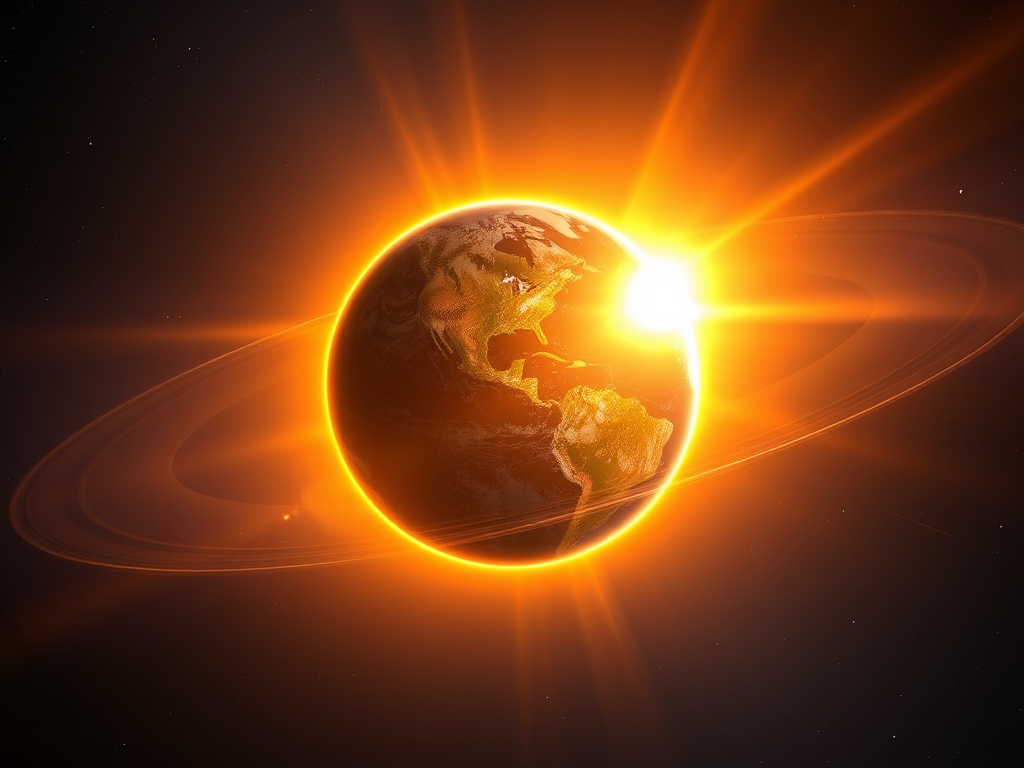
Every year, the Earth reaches a fascinating milestone in its orbital journey around the Sun. This event, known as perihelion, occurs when Earth is at its closest point to the Sun. In 2024, this cosmic occurrence takes place on January 4.
What is Perihelion?
The term “perihelion” comes from Greek, meaning “near the Sun” (peri = near, helios = Sun). The Earth’s orbit around the Sun is not a perfect circle but an ellipse. This means the distance between the Earth and the Sun varies throughout the year.
At perihelion, the Earth is approximately 147.1 million kilometres (91.4 million miles) from the Sun. This contrasts with aphelion, which occurs in early July, when the Earth is at its farthest distance from the Sun (about152.1 million kilometres or 94.5 million miles).
Why Does Perihelion Matter?
You might be surprised to know that it’s winter in the Northern Hemisphere. This is despite being closer to the Sun during perihelion. Seasons occur not due to the Earth’s distance from the Sun. They are caused by the tilt of the Earth’s axis. During January, the Northern Hemisphere is tilted away from the Sun, resulting in shorter days and colder weather.
For the Southern Hemisphere, however, perihelion aligns with summer. This alignment contributes to slightly warmer conditions compared to the Northern Hemisphere’s summer during aphelion.
Fun Facts About Perihelion
- The Sun Looks Bigger: The difference is subtle. However, the Sun appears slightly larger in the sky during perihelion compared to aphelion.
- Orbital Speed Peaks: The Earth moves faster in its orbit during perihelion, traveling at about 30.3 kilometers per second (67,000 miles per hour). This increased speed is due to the gravitational pull of the Sun.
- It’s a Universal Phenomenon: All planets in the Solar System experience perihelion and aphelion. These occur at different times based on their orbits.
Observing Perihelion
Perihelion isn’t a visually dramatic event like a meteor shower. However, it’s an excellent opportunity to reflect on the intricate dance of celestial mechanics. On January 4, take a moment to marvel at our planet’s proximity to its life-giving star. This is nearer than at any other time of the year.
The Bigger Picture
Perihelion reminds of Earth’s role in the vast, interconnected system of the Solar System. It’s a subtle reminder of the forces that govern our planet.
Mark your calendar for January 4, 2024, and take a moment to appreciate this annual cosmic milestone!