Symbols
-
Mathematical symbols – Less than or equal sign

-
Mathematical symbols – Less than sign

The mathematical symbol for “less than” is denoted by the symbol (<). This concise and versatile symbol plays a fundamental role in expressing the relationship between two quantities within the language of mathematics. The “less than” symbol is used to compare two numbers, denoting that the quantity on the left is numerically smaller than the…
-
Mathematical symbols – decimal point

A decimal point, one of the basic mathematical symbols, is a punctuation mark represented by a dot (.) that serves as a numerical separator within the decimal number system. Positioned between the whole number and fractional parts of a numerical value, the decimal point signifies the transition from integer to fractional components. The origin The…
-
Mathematical symbols – degree sign
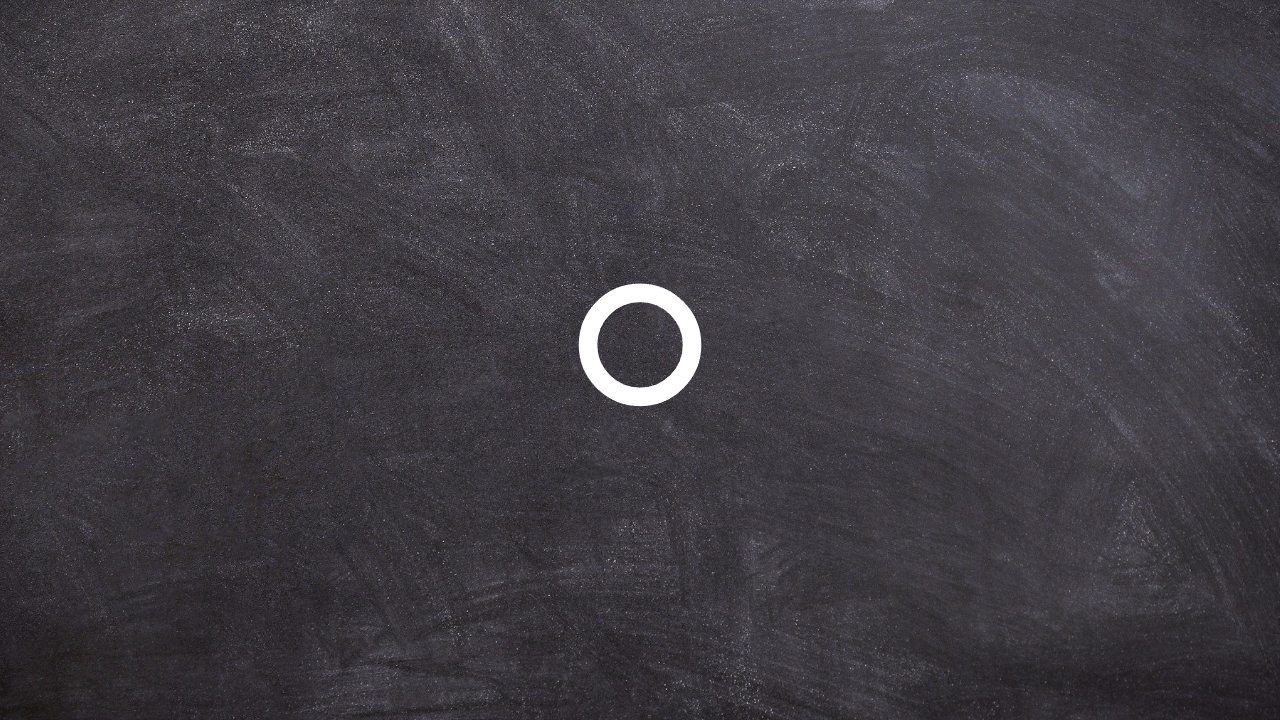
The degree sign (◦) is a fundamental mathematical symbol used to denote degrees of arc in geometry and trigonometry. The origin Its origin can be traced back to ancient Greece, where the concept of dividing a circle into 360 degrees was established by astronomers and mathematicians such as Hipparchus and Ptolemy. Function The primary function…
-
Mathematical symbols – percentage sign

The percentage sign, denoted by the symbol “%,” is a widely recognized mathematical symbol used to express proportions, ratios, or relative values. The origin Its origin can be traced back to ancient Rome, where the Latin phrase “per centum” meaning “by the hundred” was abbreviated as “pct” or simply “p cento.” Over time, the abbreviation…
-
Mathematical symbols – equivalent sign

The equivalent sign in mathematics, often denoted as “≡”, is a fundamental symbol used to express equality between two quantities or expressions. When we encounter this symbol, it signifies that the values on both sides of the “≡” sign are the same. In simpler terms, it’s like a balanced scale, indicating that the things on…
-
Mathematical symbols – approximate sign

In the language of mathematics, symbols serve as powerful tools to convey intricate concepts concisely. One such symbol, the approximate sign (≈), plays a crucial role in expressing the idea of approximation. Unlike the equal sign (=), which denotes precise equality, the approximate sign allows for a degree of flexibility, indicating that the values on…
-
Mathematical symbols – not equal sign

The mathematical symbol for “not equal” is usually represented by the symbol “≠.” This symbol is used to indicate that two quantities or expressions are not equal to each other. Historically, the concept of inequality and the need to represent it in a concise and standardized way has roots in the development of mathematical notation.…
-
Mathematical symbol – exponent

Exponents in mathematics are a way to express repeated multiplication. The exponent, often written as a superscript number, tells you how many times a base number should be multiplied by itself. For example, in the expression “23,” 2 is the base, and 3 is the exponent. It means you should multiply 2 by itself three…
-
Mathematical symbols – square root

The square symbol (√) in mathematics represents the square root of a number. The square root of a number is a value that, when multiplied by itself, gives the original number. For example, the square root of 25 (√25) is 5 because 5 multiplied by itself equals 25. History of the Square Root Symbol: Today,…