Language
-
Understanding Merism

Language is a remarkable tool that allows us to express our thoughts, emotions, and ideas. Within the vast realm of language, there are numerous figures of speech and rhetorical devices that add depth and nuance to our communication. One such device is “merism.” Merism, derived from the Greek word “merismos,” means dividing or parting. In…
-
Allophones
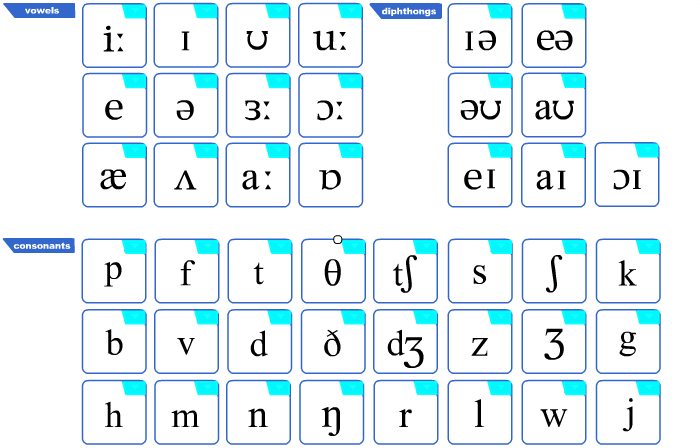
Allophones are variations of a phoneme, which is a distinct unit of sound in a language, that do not change the meaning of a word when they are used interchangeably. Allophones are an important concept in phonetics and phonology, as they help linguists understand how speech sounds can vary in different contexts and accents without…
-
Delexical verbs

Delexical verbs, also known as “light verbs” or “empty verbs,” are verbs that carry relatively little meaning on their own and are often used in conjunction with nouns or noun phrases to create specific verb-noun combinations. These combinations convey a more precise or nuanced meaning than the verb or noun would convey individually. In essence,…
-
Noun phrase

A noun phrase is a grammatical construction that consists of a noun (or pronoun), which is the main element, along with other words that modify or provide additional information about the noun. Noun phrases are a fundamental building block of sentences in language, as they help describe and specify people, places, things, ideas, and more…
-
Regular and irregular verbs
Regular verbs are a class of verbs in many languages, including English, that follow a predictable and consistent pattern when forming their past tense and past participle forms. In English, regular verbs are the most common type of verbs and are often used in everyday communication. They are called “regular” because they adhere to a…
-
Expressing the future – all the other ways
-
Verb tenses – future – perfect – continuous
The future perfect continuous tense is used to describe a continuous action that will be ongoing, continuously progressing, and completed at a specific time in the future. The future perfect continuous tense is formed by using the auxiliary verb “will have been” followed by the present participle (-ing form) of the main verb. The basic…
-
Verb tenses – future – perfect
The future perfect tense is used to express an action that will be completed or finished at a specific point in the future before another action or time reference occurs. It describes an event that will have happened by a certain time in the future. The future perfect tense is formed by using the auxiliary…
-
Verb tenses – future- continuous
The future continuous tense is used to describe an ongoing action or event that will happen in the future. It emphasizes that the action will be in progress at a specific time or during a specific period in the future. The future continuous tense is formed by using the auxiliary verb “will” followed by “be”…
-
Verb tenses – future – simple