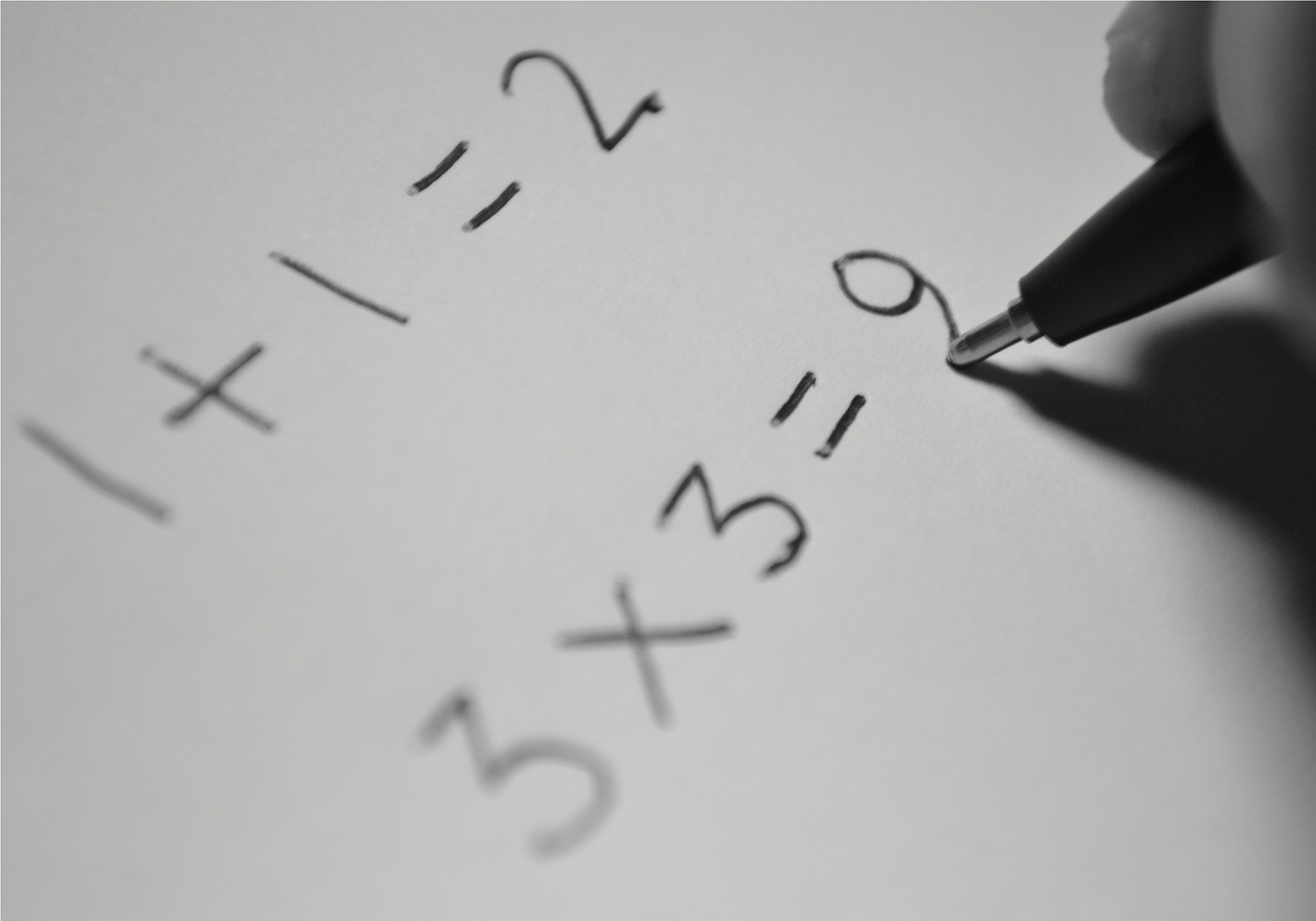
Mathematical language and its symbols are specialized to communicate mathematical ideas and concepts. It is a precise and formal language used to express mathematical statements, definitions, and proofs.
Mathematical language consists of symbols and notation, as well as a specific vocabulary and grammar. The symbols and notation used in mathematics are designed to convey meaning and convey relationships between different concepts. For example, the symbol “=” is used to denote equality, while the symbol “+” is used to denote addition.
The vocabulary of mathematical language includes terms and concepts such as “number,” “equation,” “function,” and “limit,” among others. These terms are used to describe and define various mathematical objects and concepts.
The grammar of mathematical language is also very precise and follows strict rules. For example, mathematical statements are often written in the form of an “if-then” statement, known as a conditional statement, in which a hypothesis is followed by a conclusion.
Mathematical language is an essential tool for communicating mathematical ideas and concepts, and is used by mathematicians, scientists, and engineers around the world.
2 responses to “Mathematical language & symbols”
[…] 7th century, the Indian mathematician Brahmagupta made significant contributions to the development mathematical language and exponent notation. He introduced a system for solving equations involving zero and negative […]
[…] denoted by the symbol “!”, is a mathematical operation where you multiply a number by all the positive whole […]